
How High to Hang Wall Art in Indian Homes: Sofa, Bed, Pooja Wall and Rented Flats


Most Indian homes hang wall art a little too high. Walk into a typical 2 or 3 BHK living room and the frame often sits closer to the ceiling fan than to the sofa. The piece looks “placed,” but it does not feel connected to the furniture under it.
Here is the short answer to how high to hang wall art: put the centre of a single piece about 145–152 cm (57–60 inches) from the floor. Above a sofa or bed, ignore the ceiling and leave about 15–25 cm (6–10 inches) between the top of the furniture and the bottom of the frame. Size the art to roughly two-thirds the width of that sofa or bed. The rest of this guide applies those numbers to Indian rooms: sofa walls, low headboards, pooja corners, gallery walls, and rented flats where you cannot drill freely.
The eye-level rule: 57–60 inches (145–152 cm)
Galleries and designers use eye level as the starting height. Architectural Digest India (8 March 2016) states the classic 57-inch rule: the centre of the artwork should sit 57 inches off the floor, roughly average human eye level. The Hindu (20 June 2025) quotes Chennai stylists Fymin Naif and Nimitha Harith recommending art at typically 50 to 60 inches from the floor, with a note that art hung too high feels disconnected from the space.
In centimetres, that centre band is about 145–152 cm for the common 57–60 inch range. Measure to the middle of the frame, not the bottom edge. A tall portrait and a short landscape will have different bottom clearances even when both are centred at the same height.
- Bare wall: centre at 145–152 cm (57–60 in) from the floor.
- Above furniture: 15–25 cm (6–10 in) from furniture top to frame bottom.
- Tall ceilings: keep the art tied to the seating or bed, not the ceiling line.
How high above the sofa to hang a painting
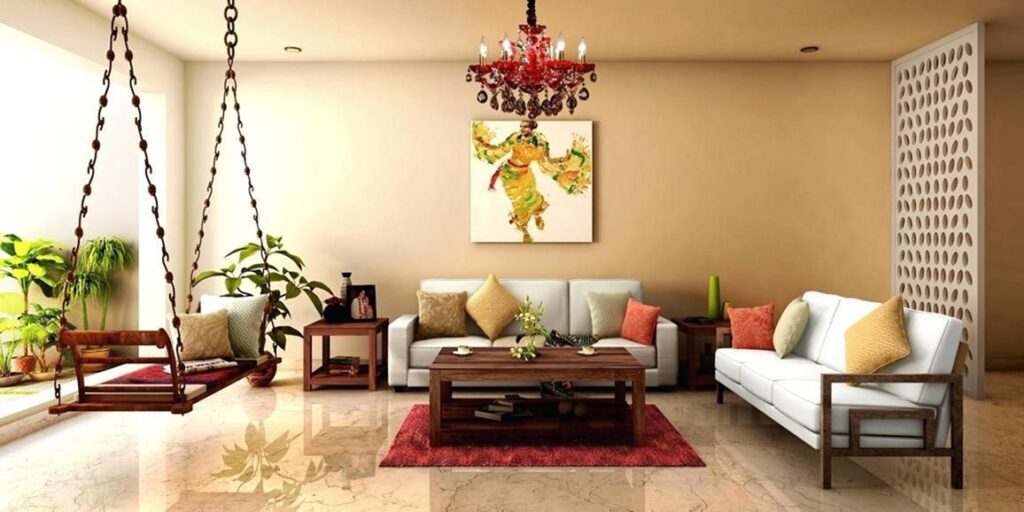
In most Indian living rooms the sofa is the focal furniture, so the art should read as part of the seating group. Leave about 15–25 cm (6–10 inches) between the top of the sofa backrest and the bottom of the frame. Architectural Digest suggests roughly 6–8 inches above a sideboard or console and a little more above a sofa. Raymour & Flanigan’s hanging guide uses a 6–10 inch band above furniture; Urban Barn’s styling guide puts the same idea at 10–20 cm (about 4–8 inches). Use the wider Indian-friendly band of 15–25 cm so cushions and people leaning back do not brush the frame.
On a typical three-seater in a 2 BHK, that usually keeps the painting below the AC or false-ceiling line and above the back cushions. Measure from the highest point of the backrest, not the seat. Centre a single piece (or the whole group) over the sofa, and keep the art about two-thirds the sofa width.
Looking for styles that work on living-room sofa walls? See modern wall art for living room walls and browse abstract wall art or minimalist wall art if you want a calmer palette.

How high above the bed or headboard
Above a bed, treat the headboard (or the mattress line if there is no headboard) the same way you treat a sofa. Leave about 15–25 cm (6–10 inches) from the top of the headboard to the bottom of the art. Low Indian headboards and platform beds often look better with art a little closer to the headboard than high Western board-and-panel styles, so start near 15–20 cm and step back to check.
Pillows matter. If you stack large cushions against the wall, leave enough clearance so fabric does not rub the frame every night. For a fabric piece instead of a framed print, the same gap still applies; our guide on how to choose a wall tapestry walks through bed widths and Desiwall tapestry sizes in inches.
Low headboards look better near 15–20 cm. Tall headboards keep 15–25 cm with room under the fan. No headboard? Measure from the mattress or a taped pillow-height line. Kids’ rooms use the same numbers—fix corners firmly. Browse kids room wall art for smaller walls.
Pooja wall and spiritual corner: height with respect and clearance
A pooja wall is not a gallery wall. Keep the arrangement calm, leave clear space for lamps, bells, and daily access, and hang the main image so adults can see it comfortably without craning. The same eye-level band—centre around 145–152 cm (57–60 inches)—works for a single spiritual print on a bare wall. Above a pooja cabinet or shelf, leave about 15–25 cm (6–10 inches) of open wall so the frame does not crowd diyas, flowers, or storage on top of the cabinet.
Practical notes (placement only, not religious rules): keep frames away from diya flames and incense heat; prefer one calm focal piece on a small shelf; measure the empty wall after the cabinet and lamps are in place.
For subject and size ideas that fit a home shrine, read spiritual wall art for pooja room and browse the spiritual wall art collection.
Gallery walls and multiple pieces
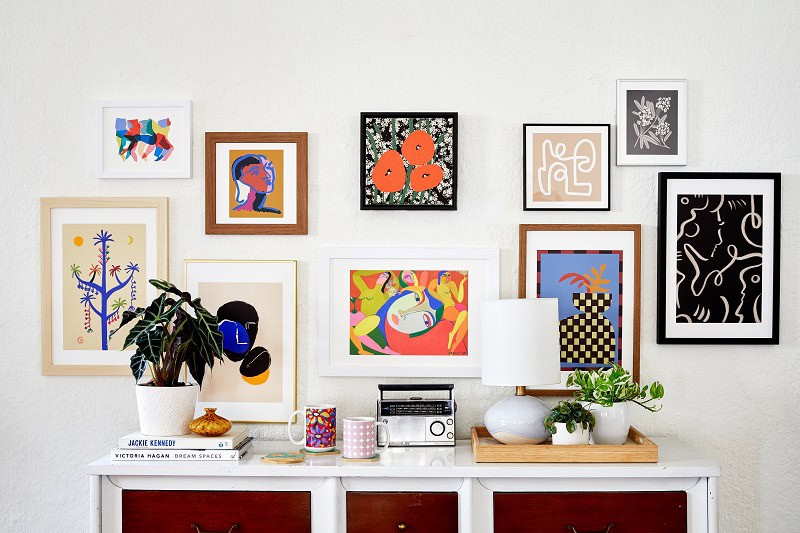
Treat the whole group as one shape. On a blank wall, centre that shape at 145–152 cm (57–60 in). Above a sofa, leave 15–25 cm to the lowest frame. The Hindu’s stylists suggest a bigger centre piece, then working outwards, with about 5–8 cm (2–3 in) between frames. Lay it out on the floor or with paper templates first, match frame finishes when subjects differ, and centre the group over the furniture.
Rented flats: hang wall art without nails
Many rented flats in Coimbatore, Chennai, Bengaluru and other cities have brick or concrete walls finished with plaster and paint. Push pins rarely hold. Landlords often dislike drill holes. You still have options if you plan for weight and wall condition.
- Adhesive hooks or hanging strips: use products rated above the frame’s weight; clean the wall; wait the full set time on the pack before hanging.
- Picture ledges or lean displays: lean a framed print on a console, mantel, or shallow shelf with no holes at all.
- Rod + hooks for fabric art: light tapestries can hang from a thin rod resting on two adhesive hooks (see the tapestry hanging section in our wall tapestry guide).
Ask before drilling. Adhesives fail on damp walls, fresh paint (wait a week), heavy texture, wallpaper and bare brick. Test removal on a hidden spot. Heavy glass needs proper anchors—not light adhesive hooks.
For choosing a ready-to-hang print and frame finish that suits Indian rooms, use the framed wall art buying guide.
Size vs height: the two-thirds furniture rule
Height alone is not enough. Aim for about two-thirds of the furniture width (up to three-quarters on a wide empty wall)—the guide The Hindu’s Naif and Harith and Urban Barn both use. Quick examples:
- Sofa about 180 cm (≈70 in) wide → art or group about 120 cm (≈47 in) wide.
- Queen bed about 150–160 cm (60–66 in) → art about 100–110 cm (40–44 in) wide.
- King bed about 180–185 cm (72 in) → art about 120–125 cm (48 in) wide, or a wider grouping.
If one print is too narrow, use a pair or small gallery. Correct size plus correct gap beats a tiny print pushed toward the ceiling.
Paper-template method before you drill
Before you drill:
- Cut newspaper or kraft paper to the outer size of each frame.
- Tape the templates on the wall with painter’s tape or masking tape.
- Mark the planned centre height (145–152 cm) or the furniture gap (15–25 cm).
- Live with the layout for a day if you can—walk past it from the door and from the sofa.
- Only then measure from the top of the real frame to the hanging wire or sawtooth, transfer that to the wall, and fix the hook.
Wide frames need two hooks and a spirit level. Match the fixings to the weight.
FAQ: how high to hang wall art
How high should you hang wall art?
Centre a single piece about 145–152 cm (57–60 inches) from the floor. Architectural Digest India cites the 57-inch centre rule; The Hindu’s stylists work in a 50–60 inch band from the floor. Adjust slightly for very tall or short household members, but start in that range.
How high above a sofa should I hang a painting?
Leave about 15–25 cm (6–10 inches) between the top of the sofa and the bottom of the frame. Keep the painting centred over the sofa, and size it to roughly two-thirds of the sofa width so the wall does not look empty.
How high above a bed should wall art hang?
Use the same 15–25 cm (6–10 inch) gap above the headboard or mattress line. On low Indian headboards, start closer to 15–20 cm so the bed and art feel connected, and leave room so pillows do not rub the frame.
How high should pooja room wall art be hung?
For a single spiritual print on a bare wall, keep the centre near 145–152 cm (57–60 inches). Above a pooja cabinet or shelf, leave about 15–25 cm of clear wall, keep flames and incense heat away from the frame, and prefer one calm focal piece over a crowded cluster.
Can I hang wall art in a rented flat without nails?
Yes, for lighter pieces. Use adhesive hooks or hanging strips rated for the weight, lean frames on a ledge or console, or hang light fabric art from a rod on adhesive hooks. Ask before drilling, avoid damp or freshly painted walls, and do not put heavy glass on light adhesives.
What size wall art looks best above a sofa or bed?
Aim for about two-thirds the width of the furniture below—up to three-quarters if the wall is wide and empty. One large piece, a coordinated pair, or a tight gallery group can all hit that width.
How do I mark the wall before drilling?
Cut paper templates the size of your frames, tape them up, check the centre height or furniture gap, and only then transfer the hanging-point measurement from the back of the frame to the wall. Two hooks and a level help wide frames stay straight.
Choose art that fits the wall you just measured
Once the height and width are clear, picking the print gets easier. For living rooms, start with modern wall art for living room walls. For prayer corners, open spiritual wall art for pooja room. For fabric on a rented wall, see shop wall tapestry and the size table in how to choose a wall tapestry. Kids’ walls and framed-print checklists sit in kids room wall art and the framed wall art buying guide.
Measure twice, hang once, and keep the art tied to the sofa, bed, or pooja shelf—not to the ceiling. That single habit fixes most “something feels off” walls in Indian homes.
Get ₹100 off your first order
Sign up and we'll send your code right away. You'll also hear about new wall art and offers first.
First order only. Min. order ₹999.