Vastu Paintings for Home: Which Wall Art Goes on Which Wall (Living Room, Bedroom, Pooja Corner)

The boxes are half unpacked, the sofa has found its corner, and someone in the family, usually an amma or a patti, asks the question that stops everything: “Which wall is the Ganesha going on?” Then a cousin forwards a list of “lucky paintings”, a neighbour says the horses must face the door, and hanging one frame starts to feel like a big decision.
This guide explains what Vastu practitioners commonly suggest about choosing a vastu painting for home, wall by wall and room by room, so you can pick a piece that respects the tradition and still looks good. It is written for real Indian homes: rented 2BHKs where the sofa wall is fixed, small flats with a pooja shelf in the hall, and families where three generations have three opinions.
What is a Vastu painting, and how much should you rely on it?
Vastu Shastra is a traditional Indian system of architecture and design. The Times of India (5 February 2025) describes it as an age-old system centred on balancing energy flow, and the practitioners it interviewed link each direction of a home with one of the five elements and with certain colours. Wall art fits in because it is the easiest thing in a home to change.
A “Vastu painting” is not a special kind of print. It is any artwork whose subject and colours match what Vastu guidance associates with a direction: a rising sun for the east, calm water for the north, earthy mountains for the south-west. This is tradition, not proven science, and no frame can promise to change your luck, health or bank balance. Many families still find these ideas meaningful, and they are a sensible way to keep a home calm and uncluttered.
Practitioners don’t always agree with each other either. Pune-based Vastu consultant and artist Namrataa Kripallani told the same newspaper: “Most Vastu experts stick to a handful of standard placements — like running horses in the northwest or a waterfall in the north — but it’s actually much more nuanced.” If two sources give you different walls, that is normal. Pick the calmer option and move on.
How do you find the direction of each wall?
Work out which wall is which before you choose anything. It takes five minutes:
- Stand near the centre of the room with your phone’s compass app open, away from the fridge, TV and steel almirahs, which can throw off the reading.
- Note which wall is on the north side. The opposite one is south, the one on your right (while you face north) is east, and the one on your left is west.
- Mark the corners too. The north-east corner is where most Vastu guidance puts the pooja space, and the south-west is linked with heavy, “grounding” things.
- Draw a small floor sketch. You will use it for every room, and it saves arguments later.
When people say “hang it on the east wall”, they usually mean the wall on the east side of the room, the one that gets morning light. That is the meaning used in this guide.
Which painting goes on which wall?
This is the direction-by-direction guidance that appears most often in Indian press coverage. The main reference is Architectural Digest India’s guide to Vastu-compliant paintings (31 July 2023), which sets out Kripallani’s suggestions as a MahaVastu practitioner.
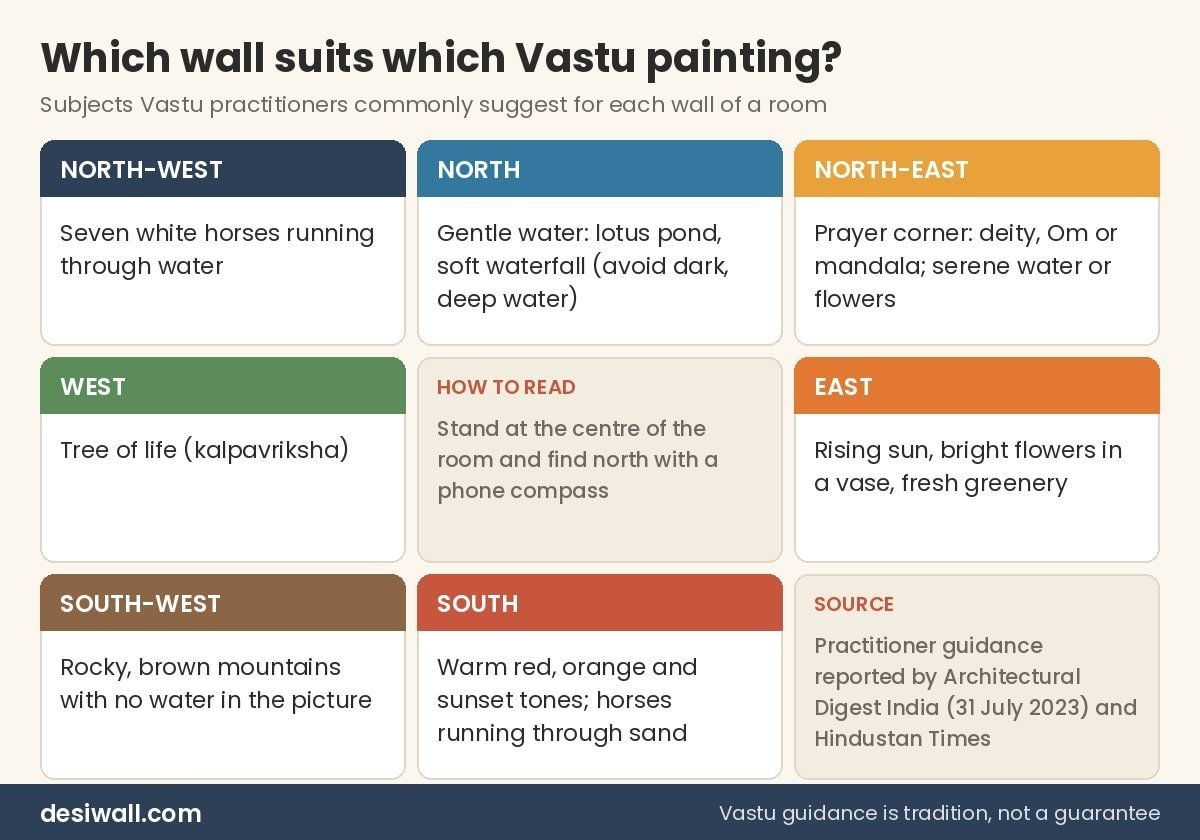
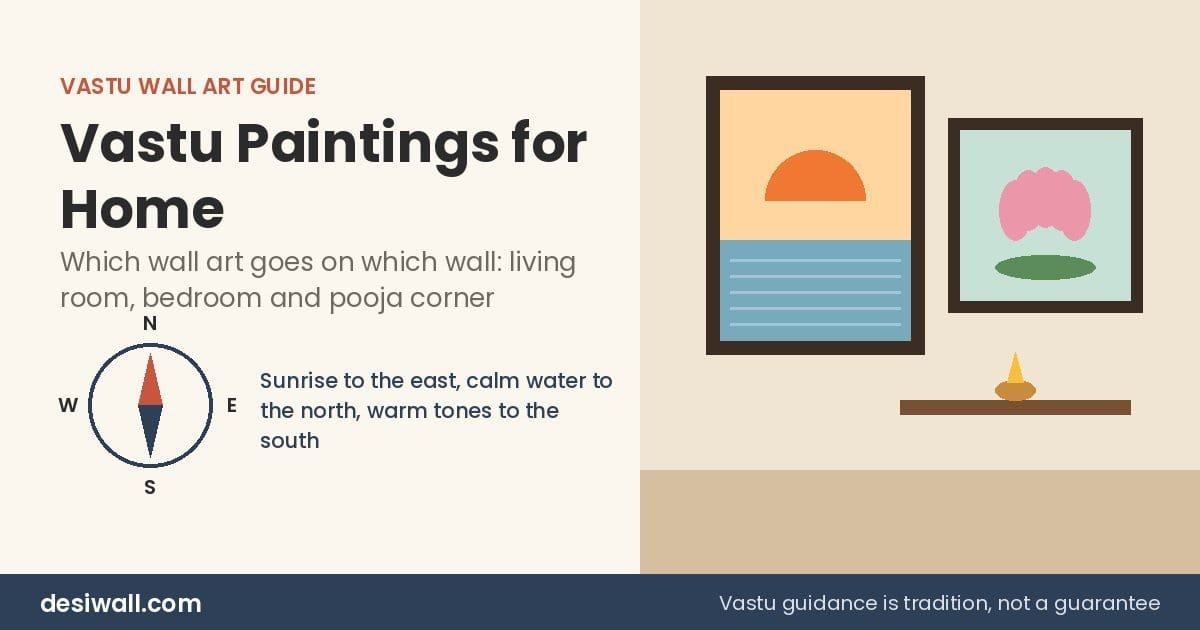
East wall: rising sun, flowers and fresh greenery
The east is tied to sunrise and new beginnings, so a rising sun or a bright floral painting is the classic choice. AD India calls flowers in a vase hung in the east a popular Vastu suggestion, and says floral art also suits north and north-east walls. Our sunrise painting wall art is the most direct match.
North and north-east walls: calm water and spiritual art
Gentle water scenes, such as a lotus pond or a soft waterfall, are commonly suggested for the north, east or north-east. AD India adds a caution worth keeping: choose water that looks serene, not dark, deep waterfalls that feel moody. The north-east is also the corner most guidance keeps for prayer, so it suits a deity, an Om or a mandala.
South and south-west walls: warm colours, horses and mountains
The south is associated with fire, so warm red, orange and sunset tones sit well here; AD India mentions horses running through sand in sunset colours. For the south-west, the suggestion is rocky, brown mountains with no water in the picture, since that corner is linked with stability.
West and north-west walls: tree of life and the seven horses
A tree of life (the kalpavriksha) is suggested for the west, and the well-known seven white horses running through water for the north-west. Desiwall does not stock a seven-horses design right now, and we would rather tell you that than sell you a substitute.
Living room: what should go on the main wall?
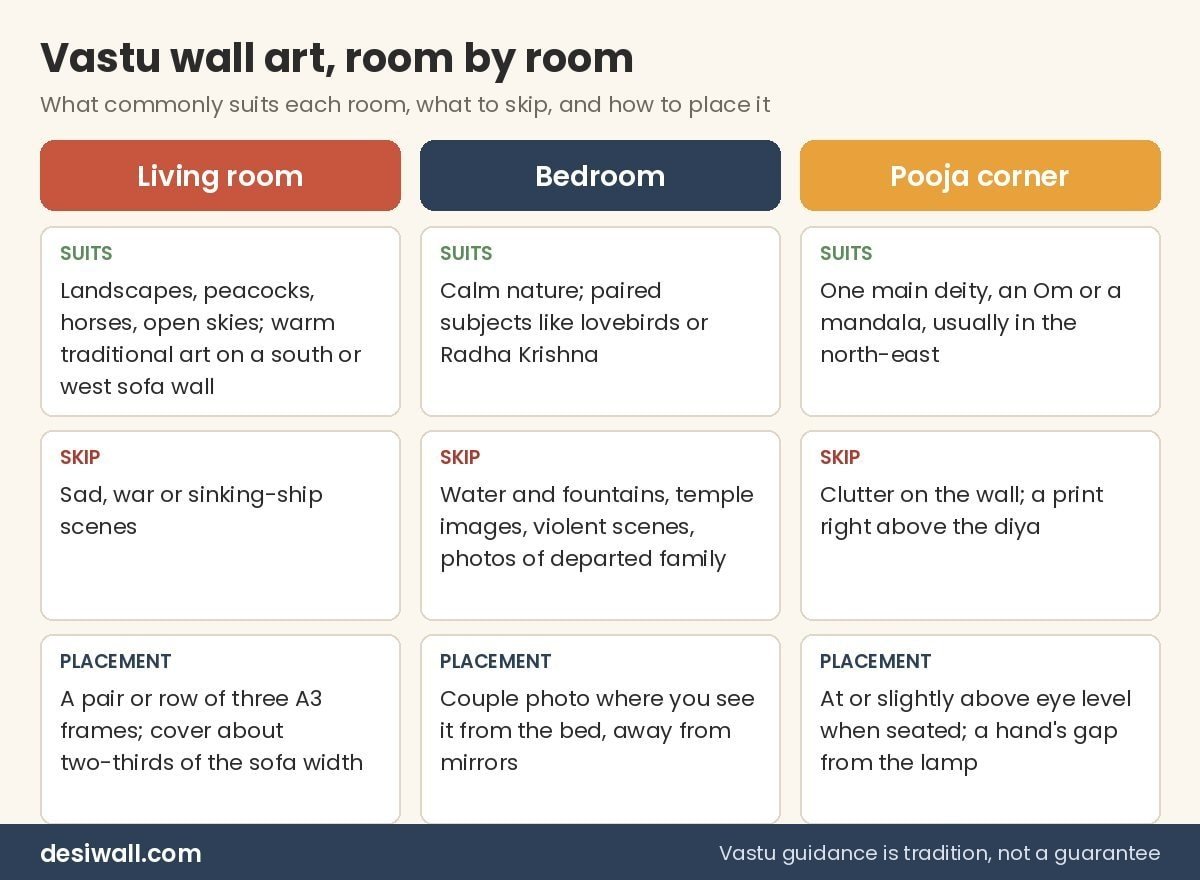
The living room is where most families hang their biggest piece. Architectural Digest India’s Vastu tips for the entrance, living room and bedroom (10 August 2019) suggest placing heavy furniture such as the sofa along the west or south-west, and name nature-inspired art, open blue skies and horses as good living room subjects. So the wall above your sofa is often a south or west wall, which suits a landscape, a peacock or a warm-toned traditional painting.
Good options from our range include the peacock wall art, the Blissful Radha Krishna print and our nature and landscape wall art. If your sofa wall faces east or north instead, swap to a sunrise or a calm water scene.
Size matters as much as direction. Our framed prints are A3, with an outer size of 11.7 x 16.5 inches. Above a three-seater sofa one A3 frame can look lonely, so hang a pair or a row of three; the usual rule of thumb is that art above a sofa covers about two-thirds of its width. Our guide on how high to hang wall art has the exact heights.
Bedroom: what do Vastu practitioners suggest?
In the bedroom, Vastu guidance leans towards fewer, softer images. Architectural Digest India’s Vastu coverage advises keeping water and fountain paintings, temple images, violent scenes and photos of departed family members out of it, and suggests paired subjects such as lovebirds or Radha Krishna for a couple’s room.
Where the couple photo goes is a point where sources differ: some say the west wall, others the south. Put it where you can see it from the bed, at a comfortable height, and away from mirrors. The Scenic Love Parrots print or a framed photo from our custom photo art range both work here, and our bedroom wall art page has more calm options.
Pooja corner: which wall art belongs there?
Most Vastu guidance places the pooja space in the north-east, with the family facing east or north while praying. In a flat, that usually means a shelf or small wooden mandir in a corner of the hall. Keep the wall behind it plain and light so the deity is the focus.
- One main deity, at or slightly above eye level when seated. A Lord Ganesh framed print or our Goddess Lakshmi wall art are common choices, though many South Indian families prefer their own kula deivam, and that matters more than any chart.
- Keep a hand’s gap from the diya. Heat and soot from lamps and agarbatti can mark a print over time, so don’t hang it directly above the flame.
- Use a mandala or Om for small spaces. Our mandala wall art suits a narrow wall beside the shelf without crowding it.
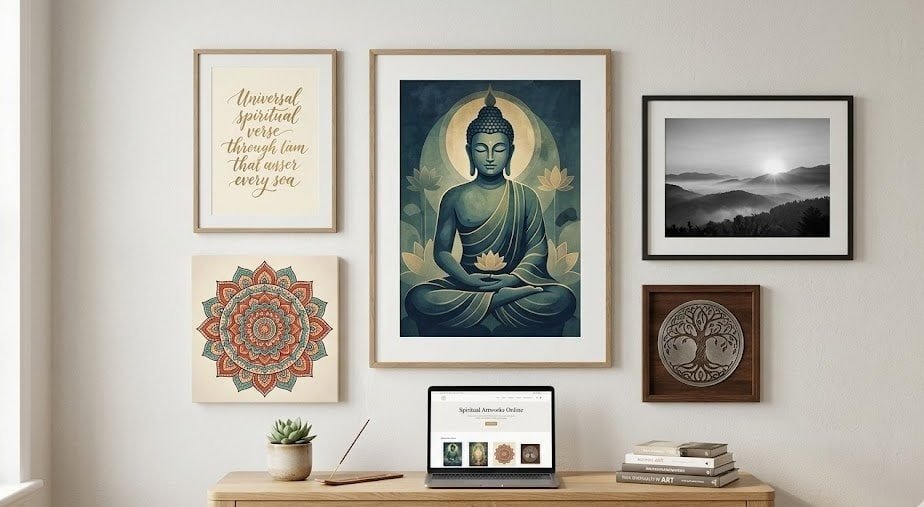
Our post on spiritual wall art for the pooja room goes deeper, and the spiritual wall art collection has Murugan, Shiva, Balaji and Buddha prints.
Which paintings do Vastu guides usually say to avoid?
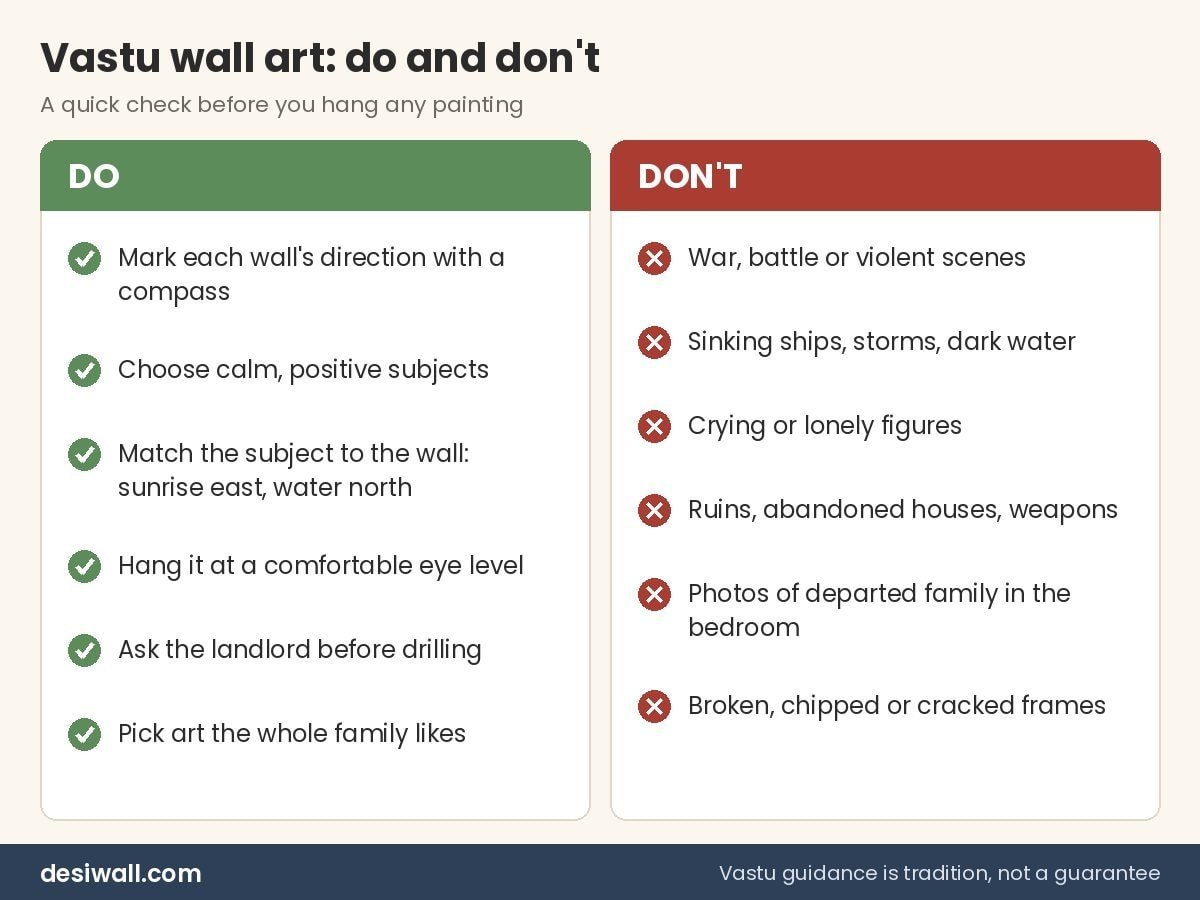
This is the part most families agree on, Vastu or not. The 2019 AD India tips list paintings of a sinking ship, war, a crying child and sadness as ones to keep off the walls, along with broken frames and cracked mirrors. Hindustan Times’ Vastu coverage adds ruins, weapons, stagnant water and fights.
- War, battle or violent scenes
- Sinking ships, storms and dark, deep water
- Crying or lonely figures and gloomy colour schemes
- Ruins, abandoned houses and weapons
- Photos of departed family members in the bedroom (many families keep them in the pooja area or hall instead)
- Broken, chipped or cracked frames and glass
You don’t need Vastu to see the sense in this. A sad picture in the hall is still a sad picture, whichever wall it is on.
How do you follow Vastu wall art tips in a rented flat?
Renters often feel left out of Vastu advice because you can’t move the kitchen or the main door. Wall art is the one thing you can change freely. Real estate consultants told Hindustan Times (13 April 2025) that Vastu is becoming a key factor in rentals too, especially among younger tenants.
- Ask before drilling, or use existing nails and picture ledges. A ledge lets you lean frames and change the arrangement without new holes.
- Choose lighter frames for adhesive hooks. Check the weight limit printed on the hook pack against your frame before trusting it.
- Try a fabric piece. Our lotus pond wall tapestry (₹1,199 to ₹2,300 depending on size) hangs with light pins and brings in the calm-water idea for a north or east wall.
For room sizes, try our free Vastu room size calculator; for room directions beyond wall art, read our Vastu Shastra tips for home.
A quick checklist before you buy
- Have I marked the directions of this room with a compass?
- Is the subject calm and positive, with nothing sad, violent or broken?
- Does the subject suit the wall’s direction, or at least not clash with it?
- Will it be at a comfortable eye level, and is it big enough for the wall?
- In a rented flat, have I checked how I will hang it without damaging the wall?
- Does the rest of the family like it? A frame that starts arguments isn’t bringing peace to anyone.
When you are ready, browse our Vastu paintings collection, with sunrise, peacock, lotus, Buddha, Radha Krishna, koi and mandala prints picked for these placements. Framed A3 prints are ₹1,299 each (price checked on desiwall.com on 20 November 2026), with free delivery across India in 4 to 8 business days. These are artworks, not certified Vastu remedies, so for direction-specific advice on your own home, speak to a Vastu consultant you trust.
Frequently asked questions
Which painting is best for the living room as per Vastu?
Vastu practitioners commonly suggest nature scenes, open skies, peacocks or horses for the living room: a rising sun on an east wall, calm water on a north wall and warm sunset tones on a south wall. Avoid anything sad or violent.
Which direction should a Vastu painting be placed in?
Common suggestions are sunrise and flowers on the east wall, gentle water on the north or north-east, warm colours and horses on the south, mountains on the south-west and a tree of life on the west.
Which paintings should not be kept at home as per Vastu?
Vastu guides usually advise against war or violent scenes, sinking ships, crying or lonely figures, ruins, weapons, dark or stagnant water and broken frames.
Can I put a waterfall painting in the bedroom?
Many Vastu practitioners advise against water and fountain paintings in the bedroom and keep them for the north or north-east of the living room. Calm nature scenes or paired subjects like lovebirds are the usual bedroom choices.
Where should a god photo go in a rented flat?
Most guidance places the pooja corner in the north-east. In a rented flat, a small shelf or freestanding mandir with one framed deity print works well, and a picture ledge or an existing nail avoids new holes.
Is a seven horses painting good for home?
It is one of the most popular Vastu subjects, and practitioners quoted by Architectural Digest India suggest the north-west for white horses running through water. Treat it as a traditional belief and choose it only if your family likes the artwork.
Get ₹100 off your first order
Sign up and we'll send your code right away. You'll also hear about new wall art and offers first.
First order only. Min. order ₹999.