Framed Wall Art Buying Guide: How to Choose the Right Print for Your Home


Buying framed wall art online is easier when you decide three things before you browse: the wall you want to fill, the mood you want the room to have, and the size that will look balanced. This guide helps you make those choices without guessing, whether you are decorating a living room, bedroom, study, or hallway.
How to choose framed wall art for your home
A good framed print should feel connected to the room, not like an afterthought. Start with the practical details first: wall width, furniture below it, lighting, and the colours already present. Then choose a subject that you will still enjoy seeing every day. The goal is not to fill an empty wall quickly. It is to give the room a clear focal point.
1. Measure the wall before choosing a print
Measure the empty wall space, not the whole room. If the artwork will sit above a sofa, bed, console, or desk, leave visible space around it so the furniture and art look like one arrangement. A small print can disappear over a large sofa, while an oversized piece can make a compact room feel crowded.
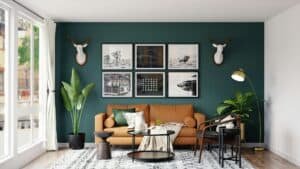
As a simple starting point, choose art that is roughly two-thirds to three-quarters of the width of the furniture below it. For a gallery wall, first mark the full arrangement on the floor or with paper templates. This gives you a better sense of scale before you make holes in the wall.
2. Match the artwork to the room’s purpose
Living rooms usually suit artwork that can hold attention from a distance: abstract designs, landscapes, bold colour, or a well-planned gallery wall. Bedrooms often work better with calmer subjects and softer tones. A study or workspace may suit typography, maps, architecture, or art that feels motivating without becoming distracting.
You do not need to follow a strict rule. Choose a subject that feels right for the people using the space. If you want a modern starting point for a shared living space, browse modern wall art ideas for living rooms before narrowing your choice.
3. Pick a style that works with what you already own
Look at the shapes, textures, and colours already in the room. A space with clean furniture, neutral walls, and simple lighting often works well with minimalist or geometric prints. A room with warm wood, plants, and handmade décor can suit botanical, vintage, or textured artwork. You do not need every item to match exactly; one repeated colour or material is usually enough to make the room feel connected.
For a clean, understated look, explore minimalist wall art. If you want a stronger focal point, abstract wall art can add colour and movement without competing with the rest of the room.
4. Choose the right frame and finish
The frame changes how the artwork feels. Black frames give many modern prints a clear outline. Natural wood can add warmth. White frames can make light or minimal artwork feel calm and airy. If you are combining several pieces, matching the frame finish is an easy way to make different subjects look intentional.
Also think about where the piece will hang. Bright windows and strong lights can create glare on some finishes. In a busy family room or hallway, choose a placement where the artwork is less likely to be knocked or exposed to moisture. Good placement protects the piece and helps people see it properly.
5. Use colour to create the mood you want
Colour has a direct effect on how a room feels. Earthy neutrals, soft greens, and gentle blues can make a room feel settled. Brighter colours can create energy and become a conversation point. Black-and-white prints can give a room contrast without adding more colour.
A safe approach is to choose artwork that includes one or two colours already found in your cushions, rug, curtains, or furniture. You can also choose one contrasting colour if the room needs a little life. Test your choice by viewing the print near the intended wall in daylight as well as under your regular evening lighting.
6. Decide between one statement piece and a gallery wall
One large framed print works well when you want a clear focal point, especially over a sofa, bed, or dining table. It keeps the wall calm and is easy to place. A gallery wall gives you more freedom to combine family interests, travel themes, illustrations, photography, or different art styles.
For a gallery wall, choose a shared element before you begin: a similar colour palette, the same frame colour, or a common theme. Keep the gaps between frames even. Lay the arrangement out on the floor first, then move it to the wall once it feels balanced.
7. Check material, print quality, and product details
When shopping online, read the product page rather than relying only on the image. Confirm the available sizes, frame option, materials, care notes, delivery estimate, and return information. Product photographs help with style, but dimensions tell you whether the piece will actually work in your room.
If you are buying several pieces, check that the frame colours and proportions work together. Save the product links, compare sizes side by side, and make a short final list. That small extra step can prevent an impulse purchase that does not fit your wall.
A quick buying checklist
- Measure the available wall and the furniture below it.
- Choose a subject that suits the room and your daily life.
- Check the print size, frame finish, and orientation.
- Review the product details, delivery, and return information.
- Plan the hanging height before placing the order.
Where to buy framed wall art in India
Choose a store with clear product details, genuine sizing information, and a collection that makes it easy to compare styles. Begin with the room you are decorating instead of searching every category at once. You can also read our guide on where to buy framed wall art in India for more ideas before you decide.
At Desiwall, you can browse wall art by style and choose pieces that fit the room you are planning. Start with one wall, measure it, and choose a print you will be happy to live with. That is a better buying decision than chasing a short-lived trend.
Frequently asked questions
What size framed wall art should I buy?
Choose a size based on the wall and the furniture below it. For a piece above a sofa or bed, artwork that spans around two-thirds to three-quarters of the furniture width is often a balanced starting point.
Should framed wall art match the furniture?
It does not need to match exactly. Repeat one or two colours, materials, or shapes from the room to make the artwork feel connected, while still allowing it to stand out.
How high should I hang framed wall art?
Hang the centre of a main artwork near eye level for the people who use the room. When it is above furniture, keep a comfortable visual gap so the furniture and art read as one arrangement.
Is a gallery wall suitable for a small room?
Yes. Keep the arrangement organised, use a limited frame palette, and leave some open wall space around it. A small gallery wall can add personality without making the room feel busy.
Get ₹100 off your first order
Sign up and we'll send your code right away. You'll also hear about new wall art and offers first.
First order only. Min. order ₹999.